Some cases are solved by a scan. This one was solved by a clock.
A 67-year-old woman came to us with an electrolyte problem and left with an epilepsy diagnosis, and the single most useful piece of information in the entire admission was not an MRI finding or a blood result. It was the exact time a seizure happened: midnight, roughly four hours after a dose of the drug that was supposed to be stopping her seizures. That one detail told us the medicine was part of the problem, not the solution. This is the story of how the timeline did the diagnosing.
How It Started: One Month of a New Antidepressant
Through the month of July, our patient was taking a common antidepressant from the SSRI group, escitalopram, at a dose of 10 mg once daily, prescribed for depression with longstanding poor sleep. She had no prior history of epilepsy or seizures.
On the 1st of August, after roughly a month on the drug, she developed altered sensorium (a change in alertness and awareness, ranging from confusion to drowsiness). Alarmed, her family took her to a large hospital, where the escitalopram was stopped and she was found to have significant electrolyte disturbance. On the 2nd of August she was transferred to our setup for further management.
This opening month matters more than it looks. Escitalopram is a well-recognised cause of low blood sodium in older adults, usually through a mechanism called SIADH (syndrome of inappropriate antidiuretic hormone secretion, where the body holds on to too much water and dilutes the sodium in the blood). The risk is highest in exactly this window, the first few weeks of treatment, and highest in exactly this patient group, women over 65. A one-month-old antidepressant prescription in a confused older woman is never a footnote.
The First Job: Correcting the Salts
On admission to us, the priority was her biochemistry. She had hyponatraemia (low blood sodium) and marked hypokalaemia (low blood potassium), with potassium dropping to around 2.68 mmol/L, a level low enough to matter for both the heart and the brain. Sodium was corrected carefully and later held in the normal range around 135 mmol/L. Renal function and eGFR stayed normal throughout.
For several days this was a metabolic admission, and it was going in the right direction.
The Decision That Changed Everything: Restarting the Drug
On the 6th of August, she was restless and had not slept. Understandably, the antidepressant was restarted to settle her.
This is the hinge of the whole case, and it is worth being honest about, because it is the kind of decision any of us might make with a distressed, sleepless patient. Restarting the SSRI to treat insomnia and agitation is intuitive. It is also, in a patient who had just been pulled out of an electrolyte crisis, a rechallenge with the very drug family implicated in that crisis.
And the electrolytes moved again. Her potassium worsened after the drug went back in. The strongest and best-documented electrolyte effect of escitalopram is on sodium, but some studies, particularly of prolonged use in elderly patients, also report a fall in potassium, and a well-known parallel from the literature is the older woman whose low sodium and delirium recurred precisely when her escitalopram was rechallenged. Our patient's course fit that pattern. The lesson writes itself: in a patient who developed electrolyte disturbance on an SSRI, restarting the same drug invites the same problem back.
The Warning Nobody Wanted to Hear: The First EEG
The same day, we ran a two-hour EEG. It showed the pattern of metabolic encephalopathy (diffuse, generalised slowing of brain activity caused by a body-wide disturbance such as electrolyte imbalance, rather than by a primary brain disease). This was consistent with everything we knew: her salts were deranged, her drug was back on board, and her brain was running slow.
But there was a detail the family had already noticed, and it worried us more than it worried them. She had brief, involuntary jerks of the hands.
We advised an overnight EEG to characterise these jerks properly, to answer the question a two-hour daytime study often cannot: are these movements epileptic, or are they the twitching of a metabolically stressed brain? The family, understandably anxious and not yet seeing anything dramatic, declined.
That declined test is the quiet thread running through this case. Several of the wrong turns that followed could have been shortened by an overnight recording, and consent for it was the one thing we kept being denied.
The Storm Breaks
The next day, she had a significant seizure with her eyes rolled up. This was no longer a subtle jerk. This was a clear, generalised event.
We treated it the way an acute seizure should be treated, with an intravenous loading dose of levetiracetam. We again described the need for two investigations: an overnight EEG and an epilepsy-protocol MRI. The family agreed to the MRI. They again refused the EEG.
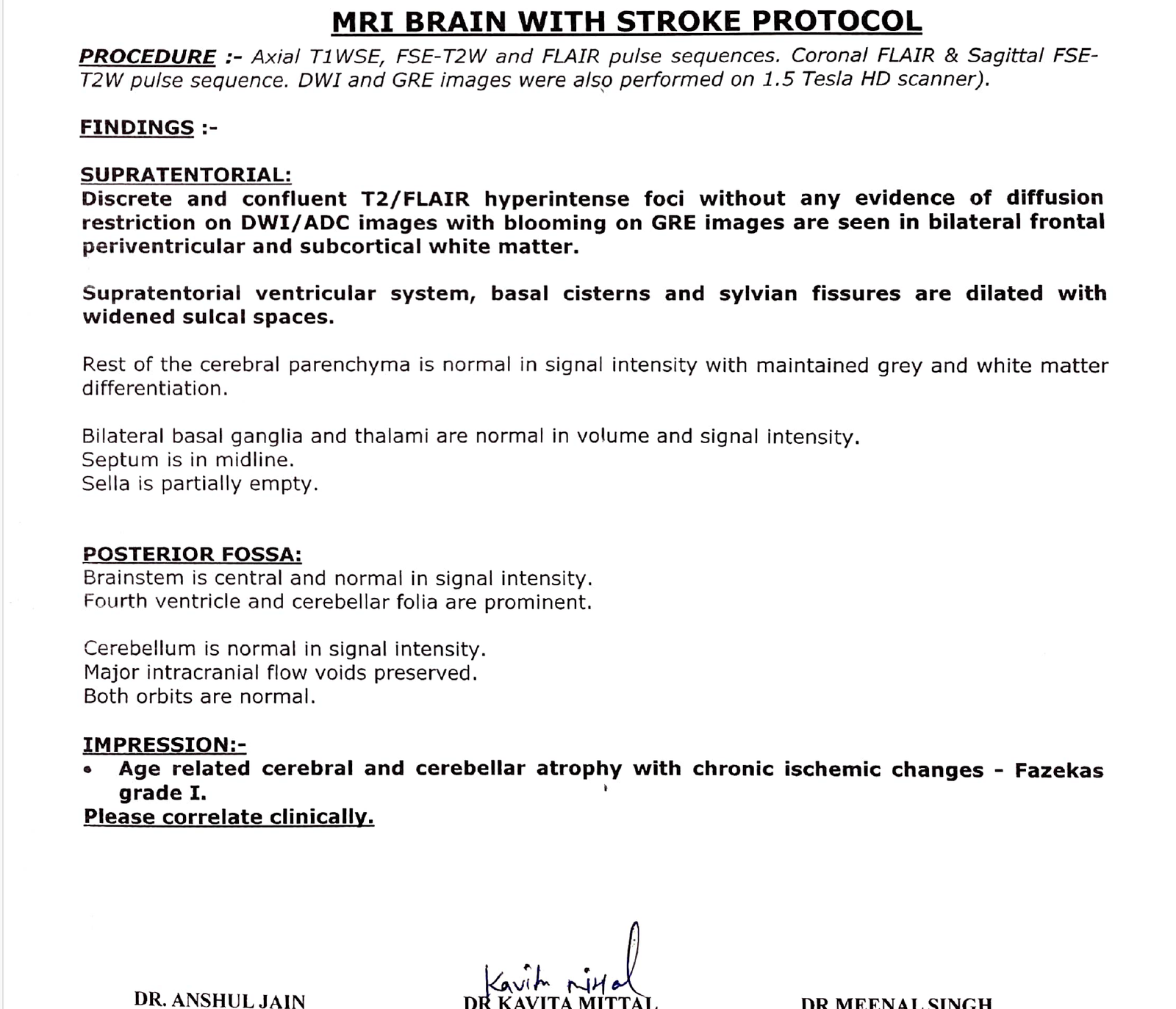
The MRI came back showing predominantly age-related changes, with no acute stroke, no tumour, and no obvious structural epileptogenic focus (a visible scar or malformation that generates seizures). This is a result that reassures families and frustrates neurologists, because a normal epilepsy MRI does not rule out epilepsy. It rules out some causes of it. The scan and the EEG answer different questions, and we still had only half our answers.
The following day, the family declined the neurology review entirely, and the antiseizure medicines were stopped.
Midnight
On the next day, at around 8 pm, she had a major seizure.
Her vital signs held. Her oxygen saturation held. But a seizing, drowsy patient is an airway you do not turn your back on, so following the first principle of resuscitation, airway, breathing, circulation, we started low-flow oxygen as a protective measure and reloaded her: intravenous midazolam as the acute rescue agent, alongside levetiracetam.
At midnight, roughly four hours later, she seized again.
Here is where the clock did its work. A breakthrough seizure hours after a benzodiazepine rescue dose is not a treatment failure in the ordinary sense. In this patient it fit something the family had told us at the very start and we had filed away: sedatives made her worse, not calmer. This is a paradoxical benzodiazepine reaction (an uncommon response in which a sedating drug produces agitation or excitation instead of calm, seen more often at the extremes of age). The very drug class we were using to abort her seizures was, in her particular neurochemistry, capable of aggravating them.
So at midnight I changed the molecule. Out went the benzodiazepine strategy; in went lacosamide, a different class of antiseizure drug working through a different mechanism.
From that point, she began to improve.
The Proof: The EEG We Finally Got
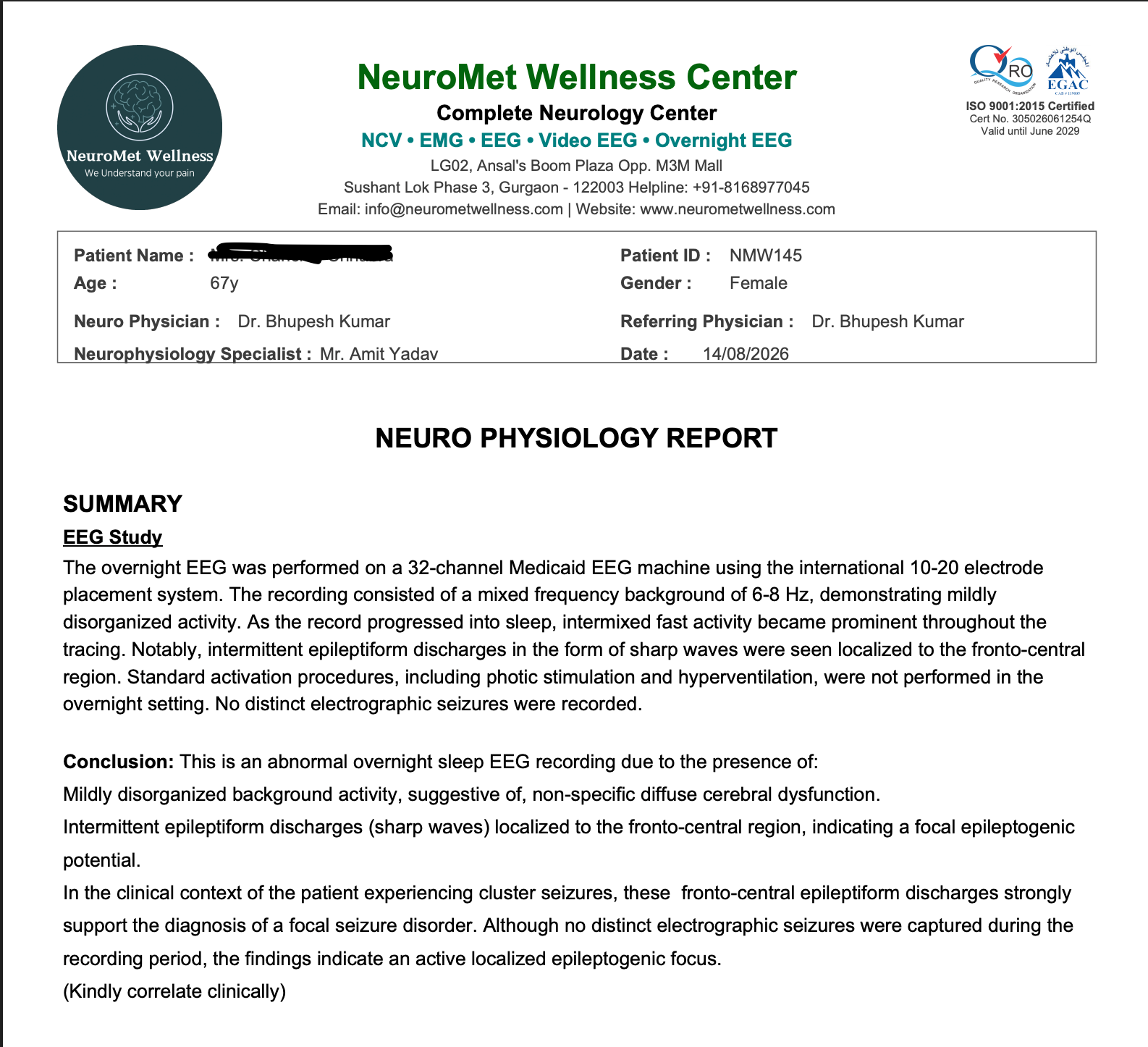
That same day, we finally obtained the overnight EEG.
It was decisive. It showed recurrent cluster seizure patterns and epileptic discharges, the spiky, evolving electrical signatures of genuine epilepsy. This was no longer a diagnosis we were inferring from the bedside. The brain's own electrical record confirmed it. These were epileptic seizures occurring in runs, a seizure cluster, and they had been there, underneath the metabolic noise, for longer than the family had been willing to believe.
Everything the overnight EEG showed, we had been asking to look for since the 6th of August. The test that was refused three times was the test that closed the case.
The Turnaround
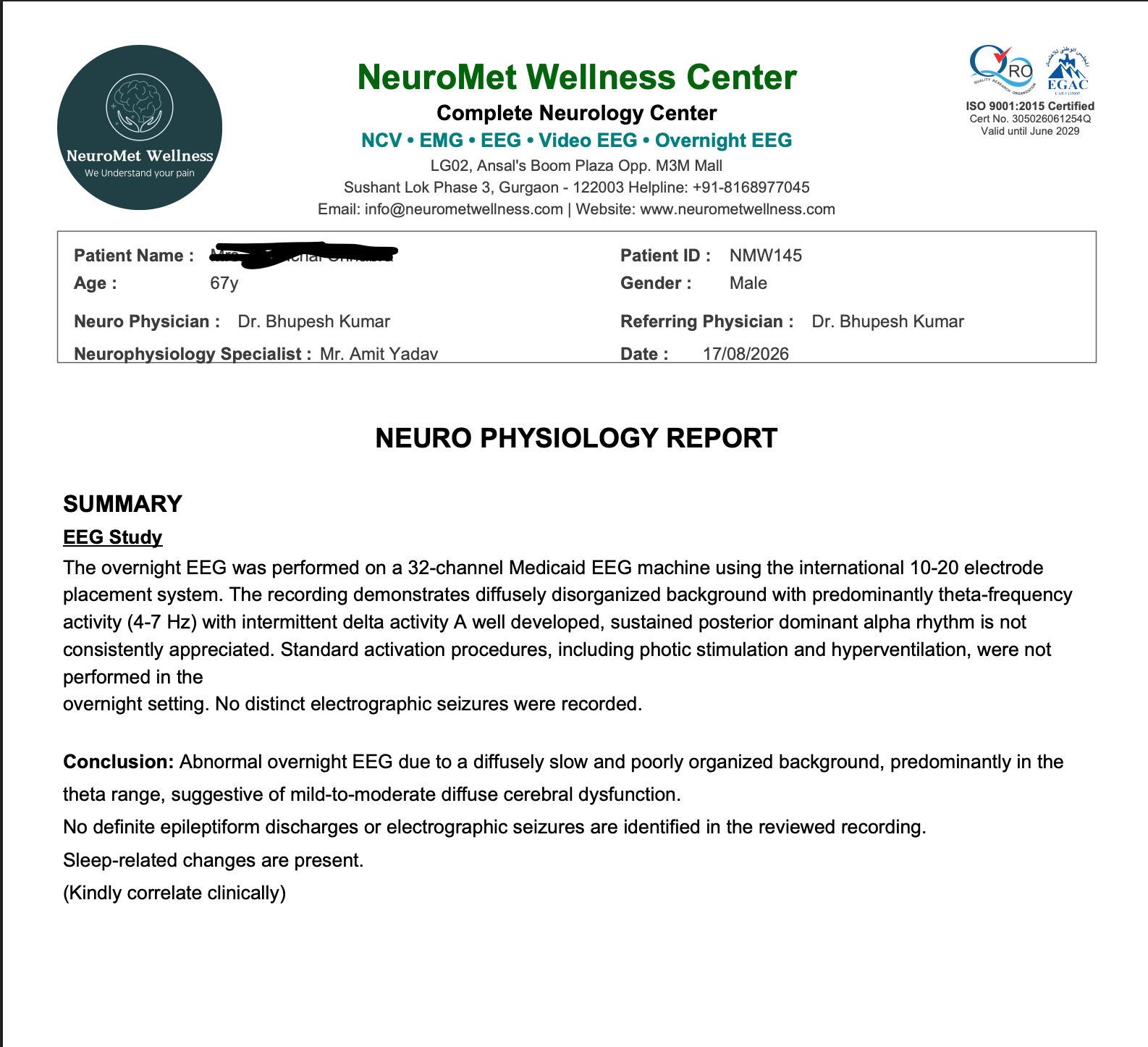
Four days later, with lacosamide established, the seizures controlled, and her electrolytes stable, we repeated the overnight EEG.
The difference was striking. No seizure patterns. No epileptic discharges. What remained was only generalised slowing (a slow background brain rhythm), and this time it was explained simply by drowsiness rather than by seizures or metabolic crisis. The epileptic activity was gone; only the sedative tail of recovery was left.
With that confirmation, we began tapering her medication. Her orientation is now better, her sensorium clearer, and she is recovering.
The Timeline at a Glance
- 1 to 31 July: Escitalopram 10 mg daily started for depression and poor sleep.
- 1 August: Altered sensorium. Family takes her to a large hospital. Escitalopram stopped. Electrolyte disturbance found.
- 2 August: Transferred to our unit. Low sodium and low potassium managed.
- 6 August: Restless and sleepless. Escitalopram restarted. Potassium worsens again. Two-hour EEG shows metabolic encephalopathy. Hand jerks noted. Overnight EEG advised, declined.
- 7 August: Major seizure with eyes rolled up. Levetiracetam loaded. MRI (agreed) normal for epilepsy causes. Overnight EEG advised again, declined.
- 8 August: Neurology review declined. Antiseizure medicines stopped.
- 9 August, around 8 pm: Major seizure. Low-flow oxygen for airway protection. Midazolam and levetiracetam loaded.
- Same night, midnight: Seizure recurs, consistent with paradoxical benzodiazepine reaction. Switched to lacosamide. Improvement begins.
- Same day: Overnight EEG finally done. Shows recurrent cluster seizures and epileptic discharges.
- Four days later: Repeat overnight EEG. No seizures, only drowsiness-related slowing. Tapering begins, orientation improving.
Diagnosis
The working diagnosis was new-onset focal seizures with impaired awareness, presenting as a seizure cluster, in an older adult in whom multiple factors had lowered the seizure threshold at once, later confirmed electrographically by overnight EEG.
The threshold-lowering factors, layered on top of one another, were low sodium, marked low potassium as a marker of metabolic disturbance, an SSRI restarted into a vulnerable patient, severe sleep deprivation, and a period without antiseizure cover after the medicines were stopped. The paradoxical benzodiazepine reaction did not cause the underlying epilepsy, but it sabotaged the treatment of it at a critical moment.
Clinical Pearls and Teaching Points
For Clinicians
-
The medication history is the diagnosis until proven otherwise. A one-month-old SSRI in a confused older woman explains the sodium, and rechallenging it explains the relapse. Before reaching for exotic causes, read the drug chart, note the start dates, and note the restarts.
-
Rechallenge is a decision, not a default. Restarting escitalopram for insomnia was humane and intuitive, but it reintroduced the drug family implicated in the original electrolyte crisis, and the potassium responded accordingly. In a patient who decompensated on a drug, restarting it should be a deliberate, monitored choice with electrolytes rechecked, not an automatic comfort measure.
-
A two-hour EEG and an overnight EEG are not the same test. The daytime study here showed metabolic encephalopathy and stopped there. The overnight study showed recurrent cluster seizures. When bedside events raise the question of epilepsy in an encephalopathic patient, the prolonged or overnight recording is often the study that actually answers it, and its refusal has consequences.
-
A normal epilepsy-protocol MRI does not exclude epilepsy. MRI answers a structural question; EEG answers an electrophysiological one. This patient had a reassuring scan and unequivocal epileptic discharges. Neither test substitutes for the other.
-
Let the clock diagnose the paradoxical reaction. A breakthrough seizure timed to a benzodiazepine rescue dose, in a patient with a reported history of agitation on sedatives, is a signal to change the molecule, not to redose. Recognising paradoxical benzodiazepine reactions can be the difference between a controlled patient and a cascading one.
-
Preserve the airway before you have the diagnosis. Stable saturations do not remove the obligation to protect a seizing, drowsy patient. Low-flow oxygen and attention to airway, breathing and circulation buy the time needed to make the right pharmacological decision.
For Patients and Families
-
The timing of every symptom matters, so tell us. In this case the single most useful clue was what time a seizure happened relative to a medicine. Small details you might dismiss can change the whole diagnosis.
-
A normal MRI does not mean nothing is wrong. Seizures can occur with a completely normal brain scan. The scan and the brain-wave test (EEG) look at different things, and doctors often need both.
-
When we ask for an overnight EEG, it is because the short one is not enough. In this admission an overnight recording was advised several times and declined, and it turned out to be the test that finally confirmed the diagnosis and guided the right treatment. If your doctor asks for it, it is rarely optional in spirit.
-
Tell us about odd reactions to medicines, especially sedatives. If a sleeping tablet or sedative has ever made your relative agitated or hyperactive instead of sleepy, that single fact can change which drugs we use in an emergency.
-
Do not stop or delay seizure medicines without a neurologist's input. In this case, stopping treatment was followed by a major seizure. If side effects worry you, ask for the dose to be reviewed rather than having the medicine withdrawn.
Frequently Asked Questions
Can an antidepressant cause seizures or confusion in older people?
Indirectly, yes. SSRIs such as escitalopram can lower blood sodium in older adults, usually within the first weeks of treatment, and a low sodium level can cause confusion and seizures. This is why new confusion in an older person recently started on an antidepressant always deserves an electrolyte check.
Can someone have a seizure for the first time at 67?
Yes. Older adults have the highest rate of new-onset seizures of any age group, driven by strokes, electrolyte problems, infections, medication effects and age-related brain changes. A first seizure later in life always warrants a full neurological evaluation.
Why do doctors ask for an overnight EEG instead of a short one?
A short daytime EEG may only capture the background state of the brain and can miss seizures that come and go. An overnight recording captures far more brain activity, including sleep, and is much more likely to catch intermittent seizure patterns. In this case, the overnight study was what confirmed the diagnosis.
Does a normal MRI mean I do not have epilepsy?
No. An MRI rules out structural causes such as tumours, strokes and scars, but many people with epilepsy have completely normal scans. Diagnosis depends on the description of the events, the EEG, and clinical assessment together.
What is a paradoxical reaction to a sedative?
It is an uncommon response in which a medicine meant to calm or sedate instead causes restlessness or agitation. It is more common at the extremes of age. It is an adverse drug reaction rather than an allergy, but it changes which sedatives are safe to use.
Is it safe to restart an antidepressant that caused a problem before?
Restarting a drug that previously caused an adverse effect, known as rechallenge, should be a careful and monitored decision, not automatic. If an antidepressant previously caused a low sodium or other electrolyte problem, restarting it can bring the same problem back, so it needs close supervision.
Specialty tag: Epilepsy | Neurodiagnostics
References
- Hirsch LJ, Fong MWK, Leitinger M, et al. American Clinical Neurophysiology Society's Standardized Critical Care EEG Terminology: 2021 Version. J Clin Neurophysiol. 2021;38(1):1-29. https://pubmed.ncbi.nlm.nih.gov/33475321/
- Glauser T, Shinnar S, Gloss D, et al. Evidence-Based Guideline: Treatment of Convulsive Status Epilepticus in Children and Adults. Epilepsy Curr. 2016;16(1):48-61. https://pmc.ncbi.nlm.nih.gov/articles/PMC4749120/
- Kapur J, Elm J, Chamberlain JM, et al. Randomized Trial of Three Anticonvulsant Medications for Status Epilepticus. N Engl J Med. 2019;381:2103-2113. https://www.nejm.org/doi/full/10.1056/NEJMoa1905795
- De Picker L, Van Den Eede F, Dumont G, et al. Antidepressants and the risk of hyponatremia: a class-by-class review of literature. Psychosomatics. 2014;55(6):536-547. https://pubmed.ncbi.nlm.nih.gov/25262043/
- Severe hyponatremia associated with escitalopram. J Family Med Prim Care. https://pmc.ncbi.nlm.nih.gov/articles/PMC5749107/
- Raj R, Jacob A, Venkatanarayan A, et al. Severe Symptomatic Hyponatremia Secondary to Escitalopram-Induced SIADH: A Case Report with Literature Review. Case Rep Med. 2018. https://www.ncbi.nlm.nih.gov/pmc/articles/PMC6145057/
- Recurrent escitalopram-induced hyponatremia in an elderly woman with dementia with Lewy bodies (rechallenge case). https://pubmed.ncbi.nlm.nih.gov/21831444/
- Escitalopram. StatPearls. NCBI Bookshelf. https://www.ncbi.nlm.nih.gov/books/NBK557734/
- DailyMed. Levetiracetam prescribing information. https://dailymed.nlm.nih.gov/dailymed/search.cfm?query=levetiracetam
- DailyMed. Lacosamide prescribing information. https://dailymed.nlm.nih.gov/dailymed/search.cfm?query=lacosamide
- Lexapro (escitalopram) US Prescribing Information, FDA. https://www.accessdata.fda.gov/drugsatfda_docs/label/2009/021323s032,021365s023lbl.pdf
This case was managed by Dr. Bhupesh Kumar Mansukhani, MBBS (Australia), MD (Medicine), DM (Neurology), Fellow in Stroke Medicine and Advanced Neurological Disorders (Harvard Medical School), Neurologist and Director, NeuroMet Wellness Care and Diagnostics, Gurgaon. For appointments and consultations, visit neurometwellness.com/booking.php
Patient details have been de-identified and shared with appropriate consent. This case study is for educational purposes only and does not constitute medical advice.