A stroke is not a heart problem. It is a brain attack.
Most people picture a stroke as something that strikes the very old, slowly, with warning. The truth is harsher and faster.
A stroke happens when the blood supply to part of the brain is suddenly cut off. From that instant, the clock starts. Brain cells, starved of oxygen, begin to die. Not over days. Over minutes. By one widely cited estimate, a typical large-vessel stroke destroys nearly two million neurons every single minute it goes untreated.
That is why the people who survive a stroke well, and the people who do not, are usually separated by one thing: how fast someone recognised it and acted.
This is the most time-sensitive emergency in all of neurology. And in India, where strokes are striking younger than ever, recognising one quickly is a skill everyone should have. Including you.
What is happening inside the brain
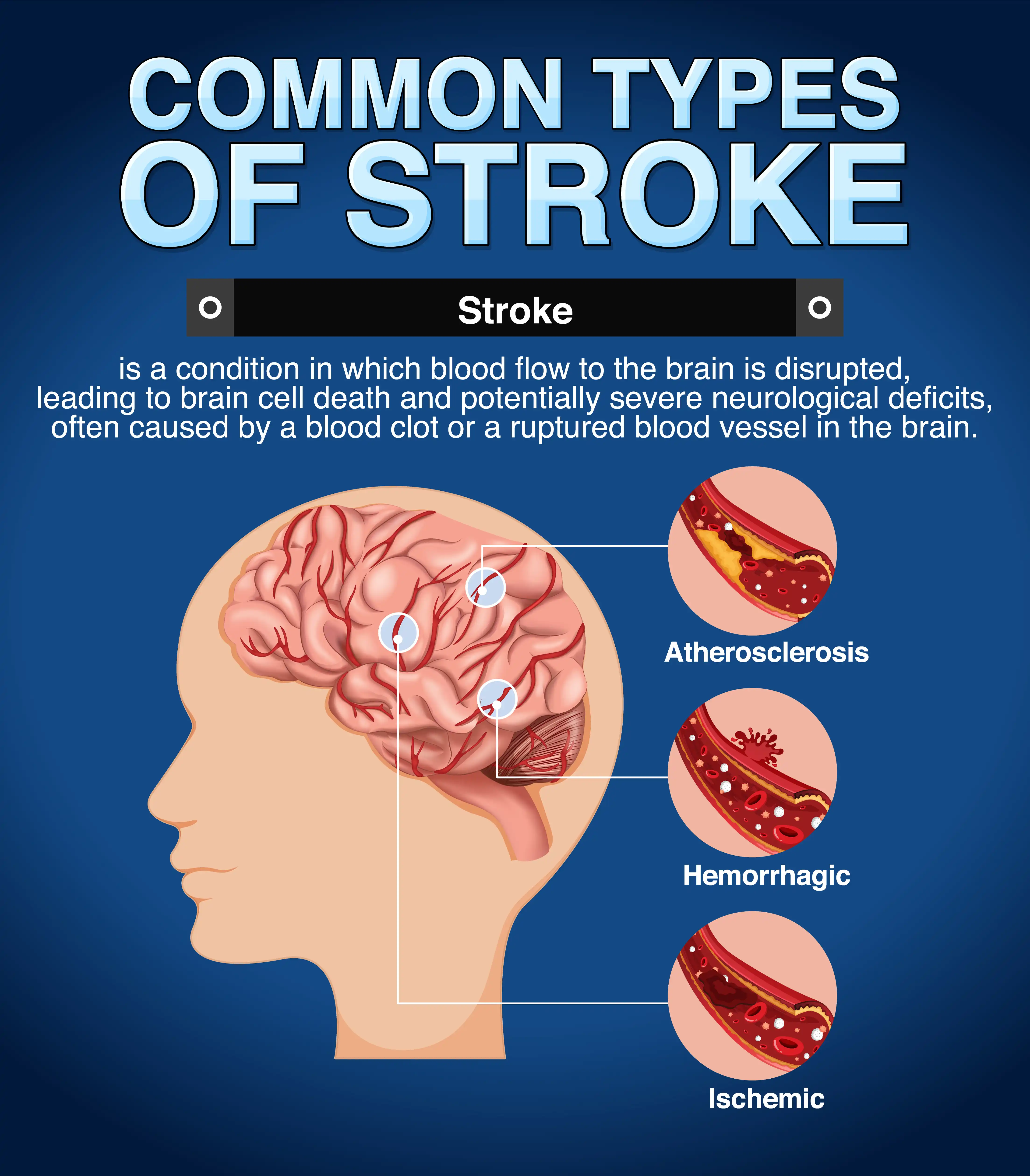
There are two main types of stroke, and they are opposites.
Ischaemic stroke is the common one, roughly four out of five cases. A clot blocks a blood vessel supplying the brain, and everything downstream of that blockage is suddenly cut off from oxygen. Think of a dam thrown across a river: the fields beyond it dry out.
Haemorrhagic stroke is the reverse. A blood vessel in or around the brain bursts and bleeds. Now there is too much pressure in the wrong place, and blood itself becomes the injury. Less common, but often more dangerous.
The reason this distinction matters is simple: the treatments are completely different, and one of them can be fatal if used in the wrong type. That is exactly why a scan and a specialist matter, and why nobody should attempt to "treat" a suspected stroke at home.
BE FAST: the test that can save a life in ten seconds
You do not need to be a doctor to spot a stroke. You need to remember five letters. If you see any one of these signs appear suddenly, treat it as a stroke until proven otherwise.
B is for Balance. A sudden loss of balance, dizziness, or trouble walking.
E is for Eyes. Sudden trouble seeing in one or both eyes, double vision, or loss of vision.
F is for Face. Ask the person to smile. Does one side of the face droop?
A is for Arms. Ask them to raise both arms. Does one drift down or feel weak?
S is for Speech. Is their speech slurred, strange, or are they unable to find words?
T is for Time. If any of these are present, time is everything. Call for emergency help and get to a hospital immediately.
The original version of this test was just FAST. The B and E were added later, because a large share of strokes, particularly those affecting the back of the brain, show up first as sudden imbalance or visual loss rather than a drooping face. Missing those is missing the stroke.
Note the word that appears in every single sign: sudden. Stroke arrives without warning. That suddenness is the clue.
The "mini stroke" that is actually a loud alarm
Sometimes the warning signs appear, last a few minutes to an hour, and then vanish completely. The face straightens, the speech returns, the arm works again. Relief. People go back to their day.
This is a transient ischaemic attack, or TIA, often called a mini stroke. And calling it "mini" is dangerously misleading.
A TIA is a clot that cleared on its own before causing permanent damage. It is not a lucky escape; it is a warning shot. A meaningful number of people who have a TIA go on to have a full, disabling stroke within days, and the highest risk is in the first forty eight hours.
So a TIA is not a reason to relax. It is a reason to be assessed urgently, because the stroke it is warning about may still be preventable. Symptoms that came and went deserve exactly the same urgency as symptoms that stayed.
Why strokes are hitting Gurgaon's professionals younger
Stroke used to be a disease of the elderly. That is changing fast, and the modern urban Indian lifestyle is a large part of why.
Undiagnosed and uncontrolled high blood pressure is the single biggest driver. It is silent, common, and frequently ignored by busy working people until it causes a stroke.
Diabetes and high cholesterol, both rising sharply in urban India, quietly damage blood vessels for years.
Sedentary corporate life, long desk hours, high stress, irregular sleep, and poor diet form a near-perfect risk cocktail.
Smoking and heavy alcohol use add directly to the danger.
An irregular heartbeat (atrial fibrillation), often undetected, can throw clots straight to the brain.
The uncomfortable reality is that many of the strokes seen today are in people in their forties and fifties who felt perfectly healthy, right up until the morning they did not. The risk factors were there the whole time, simply unmeasured.
The treatment window: why the hospital cannot wait
Here is the part that turns recognition into survival.
For an ischaemic stroke, there are treatments that can dissolve or physically remove the clot and rescue brain tissue that has not yet died. Clot-busting medication (thrombolysis) works within a limited number of hours from the moment symptoms began. For certain large clots, a procedure to mechanically retrieve the clot (thrombectomy) can be performed in selected patients within an extended window.
But every one of these treatments is governed by time. The earlier they are given, the more brain is saved and the better the recovery. Arrive in the window, and a devastating stroke can sometimes be reversed almost completely. Arrive late, and that same option is simply gone.
This is the entire reason for the urgency. The brain you save is the brain you reach in time. There is no "see how it goes by morning" with a stroke. There is only the clock.
Life after stroke, and how to stop the next one
Surviving a stroke is the beginning, not the end. Good recovery depends on early, structured rehabilitation: physiotherapy, speech therapy, and occupational therapy, started as soon as it is safe. The brain has a remarkable capacity to relearn, and that window should not be wasted.
Just as important is preventing a second stroke, because having had one raises the risk of another. This means identifying why the first stroke happened (blood pressure, diabetes, cholesterol, heart rhythm, lifestyle) and treating each cause properly, usually with a combination of medication and genuine lifestyle change. A stroke that has been properly investigated is a stroke far less likely to repeat.
When should you see a stroke specialist in Gurgaon?
Some situations are emergencies. Others are quieter, but just as important.
Call for emergency help immediately if any BE FAST sign appears suddenly, even if it goes away. Do not drive yourself. Do not wait to see if it settles.
See a stroke specialist soon if you have:
- Had any episode of sudden weakness, numbness, slurred speech, or vision loss, even briefly (a possible TIA).
- Known high blood pressure, diabetes, high cholesterol, or an irregular heartbeat that is not well controlled.
- A family history of stroke and want to understand your own risk.
- Already had a stroke and need a proper plan to prevent the next one. Stroke is one of the few catastrophic neurological events that is both highly preventable and, when caught in time, highly treatable. Both of those depend entirely on acting early.
Consult a stroke specialist in Gurgaon
Whether you need urgent assessment, TIA evaluation, or a plan to lower your stroke risk, early specialist care makes the difference.
NeuroMet Wellness Care and Diagnostics LG-02, Ansals Boom Plaza, Sushant Lok Phase 3, Sector 57, Gurugram, Haryana 122003 +91 88609 22792
If you or someone near you is showing any sign of stroke right now, do not read further. Call emergency services and get to a hospital immediately.
Authored by: Dr. Bhupesh Kumar Mansukhani | MBBS (Australia), MD (Medicine), DM (Neurology), Fellow in Stroke Medicine and Advanced Neurological Disorders (Harvard Medical School, USA) Director, NeuroMet Wellness Care and Diagnostics, Gurgaon www.drbhupesh.com
This article is for general educational purposes and is not a substitute for individual medical advice. Stroke is a medical emergency; if you suspect one, seek emergency care without delay.